Loading & Care
Loading and Handling Molecular Sieves: Points That Protect Performance
Most adsorbent problems blamed on product quality start during loading and storage. This article covers the storage, loading and sealing habits that protect performance.
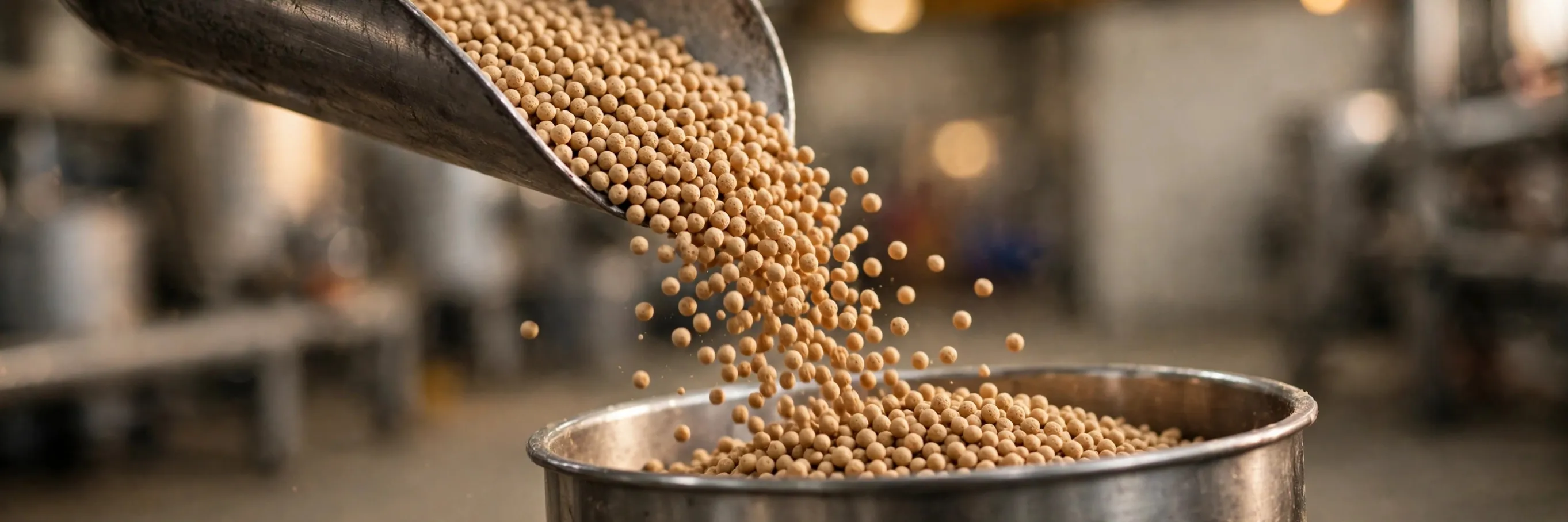
A molecular sieve leaves the supplier dry and active. Between the warehouse and your vessel, a few avoidable mistakes — rain exposure, a wet vessel, rushed loading — can cost more performance than any small difference between products. The points below are the ones that matter most.
Before loading: storage and inspection
Keep every bag and drum sealed until the moment of loading, and store them in a dry, covered place off the ground. Molecular sieve starts adsorbing moisture from ambient air as soon as packaging is opened, so material opened early or left in humid air arrives at the vessel partly spent. Before loading, inspect the packaging: reject or set aside any unit with torn packaging or signs of water contact, and check that the product and batch match your order documents.
Prepare the vessel
The vessel and its internals must be dry and clean. Any free water left from washing or hydrotesting will be adsorbed by the first material loaded and can damage it. Confirm support grids and screens are intact and correctly installed — a failed screen lets adsorbent migrate downstream, where it causes pressure-drop and fouling problems far from the bed itself.
During loading: dense, even, gentle
Load in dry weather where possible, and keep openings covered between lifts. Fill evenly across the vessel cross-section rather than dumping in one spot: an uneven bed channels gas through the thin sections and leaves the rest unused. Avoid dropping material from height or walking on the bed — crushed particles create dust, and dust raises pressure drop and can carry over into downstream equipment. Where the design calls for a support layer or a top layer of a different material, keep the layers separate and level.
After loading: seal and record
Seal the vessel as soon as loading is finished; an open vessel breathes humid air with every temperature change. Record what was loaded — product, batch, quantity and date — with the vessel's documentation. That record is what makes later performance discussions and replacement planning straightforward.
Care in service and replacement
Watch the outlet specification and pressure drop over the bed's life. A rising pressure drop usually points to dust or fouling arriving from upstream, not to the adsorbent itself; a shortened cycle usually points to changed feed conditions. When a bed is due for replacement, plan the changeout together with the spent-material handling, and send us your operating history — it is the best basis for confirming the grade and quantity for the next charge.